.png)


Custodians of Time and Fire.
An independent house shaped by the living character of our single domaine.

Over the years, we have refined a discipline that follows no calendar but its own. We believe in the gestures of the hand, from tending our single domaine, nestled in the solitude of the mountains, to harvesting each agave and composing the blend of woods for its slow cooking, a shared craft that carries through to the shaping of each decanter.
Following this same philosophy, Artis opens a new chapter for Santo de Piedra, conceived with Anne-Sophie Pic. Between Oaxaca and Valence, gastronomy, perfumery and the traditions of mezcal find a common language in the fragrance of herbs, the depth of agave and the quiet persistence of smoke.
Memories of place unfold through aroma, gestures and the light within crystal, shaped by the hands of a historic French house whose identity will be revealed in its own time. To be unveiled in 2027, Artis will take form in a very limited number of decanters, each carrying a trace of the dialogue that brought it into being.

A curated approach to time & terroir.
Our approach is curatorial and deliberate: gestures made by hand, at a pace that refuses to be hurried. From the harvesting of each agave to the shaping of every hand-blown bottle, the process answers to nothing but the human hand. Faithful to this discipline, production remains measured and intentional, not to hasten an outcome, but to allow the moment of creation to linger and endure.

The Santo de Piedra Rare Collection
The Rare Collection marks not an introduction but a threshold: the entry into the universe of Santo de Piedra. Crafted from a blend of wild and rare agaves, it is cooked using a composition of woods developed to express depth and balance, then distilled with precision and bottled at 41.5% ABV.
On the palate, it reveals green and saline notes, carried by an earthy freshness reminiscent of the first breath of soil after rain, an expression of place, not of process: the house's language spoken for the first time.
La Pastorale Secondo Movimento
by Massimo Bottura
Secondo Movimento is the final chapter of the dialogue between Modena and Oaxaca, bringing together not two techniques, but two memories of restraint. Crafted from 100% wild Tepeztate agave, it is cooked and double-distilled using juniper wood traditionally employed in Modena's acetaia for the production of balsamic vinegar at Osteria Francescana.
Conceived from a recipe developed with Massimo Bottura and bottled at 43.5% ABV, this final movement releases the last 1,500 decanters that will ever be produced, rested patiently under controlled conditions for over a year, maturing in glass according to the traditional Oaxacan practice before their release.
.jpeg)
Hautes Œuvres
Artis by Anne-Sophie Pic
Artis by Anne Sophie Pic takes its name from art, understood as the most elevated expression of the human spirit. Conceived as a Haute Œuvre, it brings the terroir of Oaxaca and the aromatic sensibility of Valence into a shared work, where ingredients and gestures become the language of a creative intention. Through the disciplines of perfumery, the collection seeks the purest essence of matter and the singular capacity of aroma to remain in memory long after its presence has faded.
Extraction, distillation and assemblage give form to this dialogue, bringing the character of the agave into relation with the delicate expression of herbs. Anne Sophie Pic’s understanding of aroma meets the knowledge of the House’s distillers through successive compositions, each seeking the precise accord in which taste, scent and memory may become one.
Still in creation, Artis extends this encounter to one of France’s most iconic crystal makers, whose name will be revealed in its own time. Conceived alongside the spirit, the vessel gives tangible form to an ethereal composition, carrying the shared intention through the gestures of the crystal maker into a very limited collection to be unveiled in 2027.

Guided by the most Michelin decorated female chef in the world.
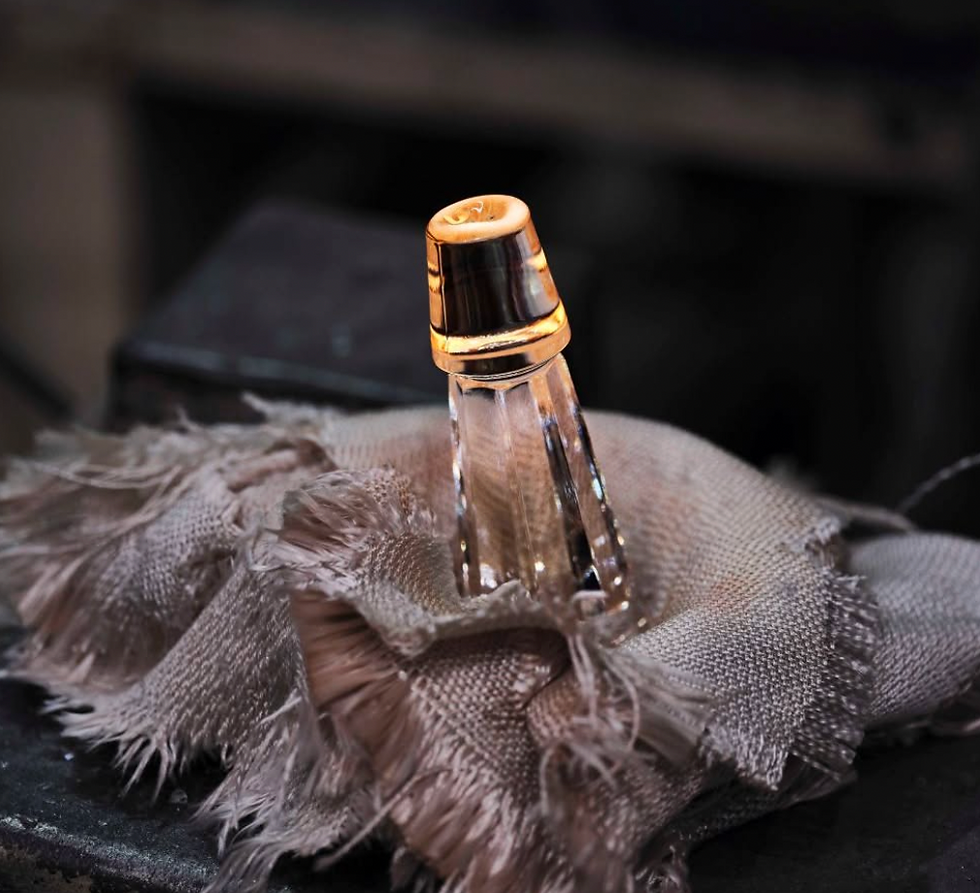
Made in collaboration with one of the most iconic French Crystal Makers
_edited.jpg)
Each decanter was inspired on six fog-veiled mornings in Modena, the homeland of chef Massimo Bottura.
.jpeg)
Each Piece is inspired by a foggy morning in Modena
Murano by Massimo Bottura.
La Pastorale x Massimo Bottura finds its fullest expression in a Haute Œuvre, where the gesture of the hand gives form to a shared creative intention. In quiet resonance with Beethoven’s Sixth Symphony, six decanters draw their inspiration from the same morning veiled in fog in Modena. Each begins with the same memory, yet the movement of the glass, its transparency and its response to light make every piece singular. For this expression, the liquid composition received a barely perceptible variation, conceived to evolve patiently within the bottle, as music continues to resonate after the final note. The judgement of our master distillers and the gestures of Murano’s glassmakers carry that intention from the spirit into its vessel. Each decanter was shaped by hand in Venetian glass, individually numbered and personally signed by Massimo Bottura.
The dialogue that brought these works into being continues within the House, opening towards new expressions. For enquiries concerning the Murano decanters, or to follow the creation of our next Haute Œuvre, we welcome correspondence through our Private Clients Service.


